
Understanding Therapy with Eithne Hannan
Questions about your mental health journey
If you’re considering therapy or just getting started, you’ll find clear answers here about what to expect, session details, fees, and confidentiality.


What are your credentials?
I am a Registered Psychologist with AHPRA and a member of the Australian Association of Psychologists. I hold a MSc in Occupational Psychology (work psychology), a BA (Hons) in Psychology. In my practice, I integrate IFS, Acceptance Commitment Therapy, CBT, mindfulness and positive psychology principles. I am a Level 1 trained IFS Therapist (due to complete Level 2 Training Jan 2026) and have completed extensive training in other therapeutic approaches including Acceptance Commitment Therapy (ACT), DBT, Radically Open DBT (RO DBT) and other evidence-based modalities.


What therapeutic approaches do you use?
I offer a client-led, evidence-based approach to therapy grounded in warmth, respect, and curiosity. I draw on a range of modalities including Internal Family Systems (IFS), Acceptance and Commitment Therapy (ACT), CBT, Positive Psychology, and Polyvagal Theory. Therapy is tailored to your individual needs, goals, and pace.
What is Internal Family Systems (IFS)?
IFS is a therapy model that helps you explore and harmonise the different parts of yourself and connect with your core Self. It can be especially helpful for addressing trauma, emotional overwhelm, and inner conflict.

What is Polyvagal Theory?
Polyvagal Theory explains how the nervous system responds to safety and threat. Understanding these patterns supports emotional regulation, resilience, and healing — particularly in the context of trauma, anxiety, or stress.
What happens in the first session?
Our first session is a chance to get to know each other. I’ll ask a few gentle questions to understand what brings you to therapy and what matters most to you. There’s no pressure to share everything at once — we’ll go at your pace. These early sessions are also a way for you to decide if this feels like the right fit.
Do I need a referral to see you?
No referral is needed to book an appointment. However, if you wish to claim Medicare rebates, you’ll need a referral and Mental Health Care Plan from your GP.
Do you offer online sessions?
Yes. I offer both in-person sessions in Bondi Junction and telehealth (online) appointments.
Is everything I share confidential?
Yes, confidentiality is strictly maintained except in rare legal or ethical circumstances.
How often will I need to attend?
This depends on your needs and preferences. Many clients attend weekly or fortnightly. We can discuss what feels most supportive for you.
What if I’m not sure therapy is right for me?
That’s completely okay. Many people feel unsure at first. You're welcome to try a few sessions and see how it feels. If it turns out I’m not the right person to support you, I’ll gladly help you find another practitioner or service that better suits your needs.
Do you work with children or couples?
I work with adult individuals (18+). I do not currently offer therapy for children, adolescents, couples, or families.
Fees, and medicare rebates
What is the cost of a session?
Each 50-minute session is $260.
Can I claim a Medicare rebate?
Yes. If you have a valid Mental Health Care Plan from your GP, you may be eligible for a rebate of $93.35 per session for up to 10 sessions per calendar year.
Do you offer concession rates?
At this stage, I do not offer concession rates. However, you may be eligible for Medicare rebates with a valid Mental Health Care Plan.
What’s your cancellation policy?
Please provide at least 24 hours notice if you need to cancel or reschedule your session. Cancellations with less notice may incur the full session fee.
What issues can I see you for?
What issues can I see you for? You’re welcome to reach out for support with a wide range of concerns, including anxiety, depression, burnout, perfectionism, relationship issues, parenting concerns, grief, and life transitions.
A full list of areas I work with can be found my About page.
What therapeutic approaches do you use?
I offer a client-led, evidence-based approach to therapy grounded in warmth, respect, and curiosity. I draw on a range of modalities including Internal Family Systems (IFS), Acceptance and Commitment Therapy (ACT), CBT, Positive Psychology, and Polyvagal Theory. Therapy is tailored to your individual needs, goals, and pace.
What is Internal Family Systems (IFS)?
IFS is a therapy model that helps you explore and harmonise the different parts of yourself and connect with your core Self. It can be especially helpful for addressing trauma, emotional overwhelm, and inner conflict.
What is Polyvagal Theory?
Polyvagal Theory explains how the nervous system responds to safety and threat. Understanding these patterns supports emotional regulation, resilience, and healing — particularly in the context of trauma, anxiety, or stress.
Do I need a referral to see you?
No referral is needed to book an appointment. However, if you wish to claim Medicare rebates, you’ll need a referral and Mental Health Care Plan from your GP.
What is the cost of a session?
Each 50-minute session is $260.
Can I claim a Medicare rebate?
Yes. If you have a valid Mental Health Care Plan from your GP, you may be eligible for a rebate of $93.35 per session for up to 10 sessions per calendar year.
Do you offer online sessions?
Yes. I offer both in-person sessions in Bondi Junction and telehealth (online) appointments.
How often will I need to attend?
This depends on your needs and preferences. Many clients attend weekly or fortnightly. We can discuss what feels most supportive for you.
Is everything I share confidential?
Yes, confidentiality is strictly maintained except in rare legal or ethical circumstances.
What happens in the first session?
Our first session is a chance to get to know each other. I’ll ask a few gentle questions to understand what brings you to therapy and what matters most to you. There’s no pressure to share everything at once — we’ll go at your pace. These early sessions are also a way for you to decide if this feels like the right fit.
What if I’m not sure therapy is right for me?
That’s completely okay. Many people feel unsure at first. You're welcome to try a few sessions and see how it feels. If it turns out I’m not the right person to support you, I’ll gladly help you find another practitioner or service that better suits your needs.
Do you work with children or couples?
I work with adult individuals (18+). I do not currently offer therapy for children, adolescents, couples, or families.
Do you offer concession rates?
At this stage, I do not offer concession rates. However, you may be eligible for Medicare rebates with a valid Mental Health Care Plan.
What’s your cancellation policy?
Please provide at least 24 hours notice if you need to cancel or reschedule your session. Cancellations with less notice may incur the full session fee.
What are your credentials?
I am a Registered Psychologist with AHPRA and a member of the Australian Association of Psychologists. I hold a MSc in Occupational Psychology, a BA (Hons) in Psychology, and have completed IFS Level 1 training along with extensive training in ACT, CBT, and DBT-informed approaches.
What issues can I see you for?
What issues can I see you for? You’re welcome to reach out for support with a wide range of concerns, including anxiety, depression, burnout, perfectionism, relationship issues, parenting concerns, grief, and life transitions.
A full list of areas I work with can be found my About page.
What therapeutic approaches do you use?
I offer a client-led, evidence-based approach to therapy grounded in warmth, respect, and curiosity. I draw on a range of modalities including Internal Family Systems (IFS), Acceptance and Commitment Therapy (ACT), CBT, Positive Psychology, and Polyvagal Theory. Therapy is tailored to your individual needs, goals, and pace.
What is Internal Family Systems (IFS)?
IFS is a therapy model that helps you explore and harmonise the different parts of yourself and connect with your core Self. It can be especially helpful for addressing trauma, emotional overwhelm, and inner conflict.
What is Polyvagal Theory?
Polyvagal Theory explains how the nervous system responds to safety and threat. Understanding these patterns supports emotional regulation, resilience, and healing — particularly in the context of trauma, anxiety, or stress.
Do I need a referral to see you?
No referral is needed to book an appointment. However, if you wish to claim Medicare rebates, you’ll need a referral and Mental Health Care Plan from your GP.
What is the cost of a session?
Each 50-minute session is $260.
Can I claim a Medicare rebate?
Yes. If you have a valid Mental Health Care Plan from your GP, you may be eligible for a rebate of $93.35 per session for up to 10 sessions per calendar year.
Do you offer online sessions?
Yes. I offer both in-person sessions in Bondi Junction and telehealth (online) appointments.
How often will I need to attend?
This depends on your needs and preferences. Many clients attend weekly or fortnightly. We can discuss what feels most supportive for you.
Is everything I share confidential?
Yes, confidentiality is strictly maintained except in rare legal or ethical circumstances.
What happens in the first session?
Our first session is a chance to get to know each other. I’ll ask a few gentle questions to understand what brings you to therapy and what matters most to you. There’s no pressure to share everything at once — we’ll go at your pace. These early sessions are also a way for you to decide if this feels like the right fit.
What if I’m not sure therapy is right for me?
That’s completely okay. Many people feel unsure at first. You're welcome to try a few sessions and see how it feels. If it turns out I’m not the right person to support you, I’ll gladly help you find another practitioner or service that better suits your needs.
Do you work with children or couples?
I work with adult individuals (18+). I do not currently offer therapy for children, adolescents, couples, or families.
Do you offer concession rates?
At this stage, I do not offer concession rates. However, you may be eligible for Medicare rebates with a valid Mental Health Care Plan.
What’s your cancellation policy?
Please provide at least 24 hours notice if you need to cancel or reschedule your session. Cancellations with less notice may incur the full session fee.
What are your credentials?
I am a Registered Psychologist with AHPRA and a member of the Australian Association of Psychologists. I hold a MSc in Occupational Psychology, a BA (Hons) in Psychology, and have completed IFS Level 1 training along with extensive training in ACT, CBT, and DBT-informed approaches.
What is Internal Family Systems (IFS) Therapy?
Internal Family Systems (IFS) therapy is a form of psychotherapy developed by Dr Richard C. Schwartz in the 1980s. It offers a holistic and integrative approach designed to help individuals understand and heal internal conflicts and emotional wounds.
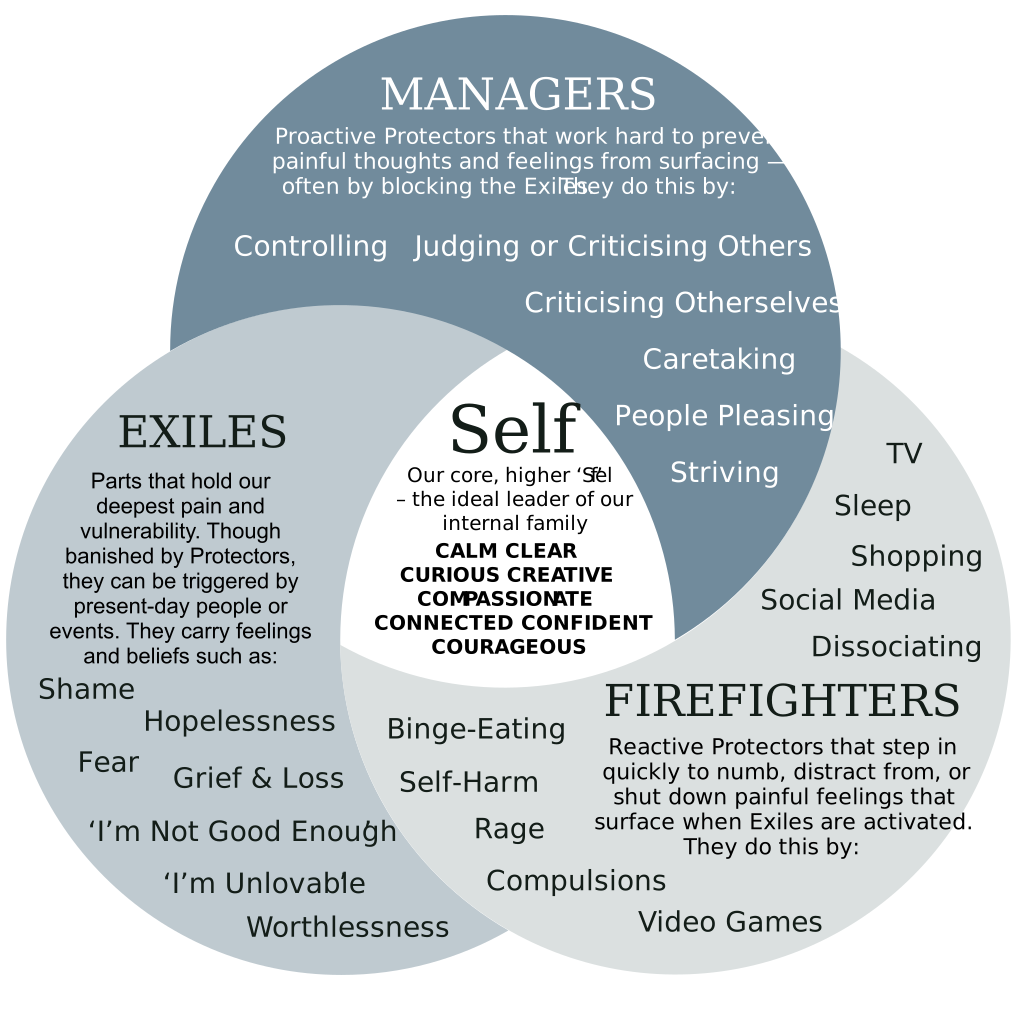
At the heart of the model is the idea that each person is made up of multiple 'parts' or subpersonalities, each with its own unique traits and experiences. These may include the inner critic, the protector, the pleaser, and the wounded child, among others. Formed in response to life experiences, these parts can sometimes come into conflict with one another, creating inner tension and making it difficult to make healthy, balanced decisions.
Through IFS therapy, individuals learn to identify and differentiate between their various parts while reconnecting with their core 'Self' – the aspect of a person that embodies compassion, acceptance and wisdom. By fostering a stronger relationship with the Self, people can develop a more harmonious internal system and move towards greater self-leadership and emotional regulation.
This approach can support a wide range of mental health concerns, including anxiety, depression, trauma and relationship difficulties. It is particularly effective for those who have experienced childhood trauma or who find it challenging to manage emotions and behaviours. Many also find IFS beneficial when feeling stuck or directionless, as it helps cultivate clarity, purpose and inner balance.
Sessions are typically conducted one-on-one, though couples or family work may also be included depending on individual needs. The process is collaborative, with therapist and client working together to explore internal dynamics and develop strategies for healing and personal growth.
A key feature of IFS therapy is its non-pathologising stance. Rather than viewing symptoms as signs of disorder, it recognises them as protective responses that once served an important purpose. This strength-based perspective emphasises the inherent resilience and wisdom within every person, supporting individuals to access their own capacity for healing, peace and fulfilment.
What is Internal Family Systems (IFS) Therapy?
Internal Family Systems (IFS) therapy is a form of psychotherapy developed by Dr Richard C. Schwartz in the 1980s. It offers a holistic and integrative approach designed to help individuals understand and heal internal conflicts and emotional wounds.
At the heart of the model is the idea that each person is made up of multiple 'parts' or subpersonalities, each with its own unique traits and experiences. These may include the inner critic, the protector, the pleaser, and the wounded child, among others. Formed in response to life experiences, these parts can sometimes come into conflict with one another, creating inner tension and making it difficult to make healthy, balanced decisions.
Through IFS therapy, individuals learn to identify and differentiate between their various parts while reconnecting with their core 'Self' – the aspect of a person that embodies compassion, acceptance and wisdom. By fostering a stronger relationship with the Self, people can develop a more harmonious internal system and move towards greater self-leadership and emotional regulation.
This approach can support a wide range of mental health concerns, including anxiety, depression, trauma and relationship difficulties. It is particularly effective for those who have experienced childhood trauma or who find it challenging to manage emotions and behaviours. Many also find IFS beneficial when feeling stuck or directionless, as it helps cultivate clarity, purpose and inner balance.
Sessions are typically conducted one-on-one, though couples or family work may also be included depending on individual needs. The process is collaborative, with therapist and client working together to explore internal dynamics and develop strategies for healing and personal growth.
A key feature of IFS therapy is its non-pathologising stance. Rather than viewing symptoms as signs of disorder, it recognises them as protective responses that once served an important purpose. This strength-based perspective emphasises the inherent resilience and wisdom within every person, supporting individuals to access their own capacity for healing, peace and fulfilment.